From Couture to Conscious Leadership: Building Legacy, Confidence and Economic Empowerment
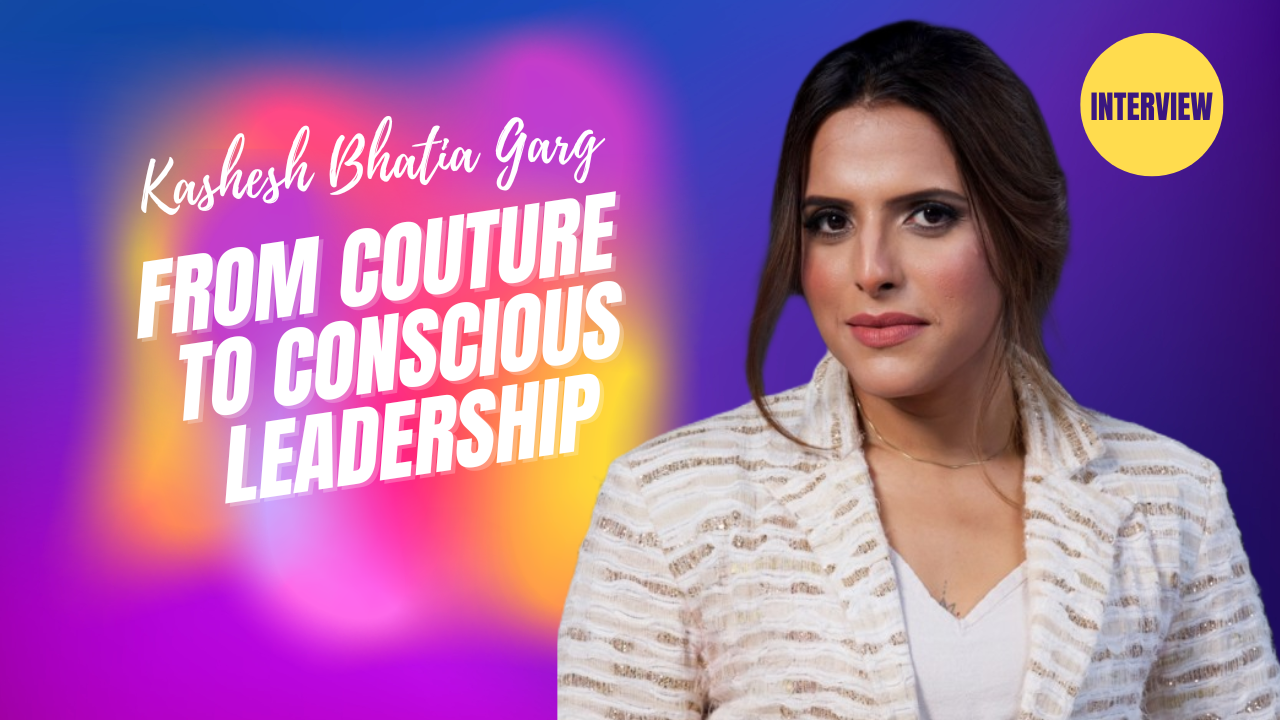
Kashesh Bhatia Garg, founder of Kashesh Global and Konscious Kollective, reflects on the defining moments that reshaped her journey—from designing couture in India to building a purpose-driven fashion legacy in Dubai. In this conversation, she discusses the unspoken expectations women face in leadership, the growing influence of AI in fashion, and why true empowerment is rooted in economic confidence, ownership, and the courage to redefine the spaces women lead.
What defining moments or challenges most shaped your professional journey?
My journey began in couture in India, where I spent over a decade designing wedding garments. I saw families invest deeply in a single day. Yet the same women struggled to invest in how they showed up in boardrooms or everyday leadership.
The turning point came when I moved to Dubai in 2020 during the pandemic. I began questioning fashion’s deeper impact socially and environmentally. That’s when Kashesh Global evolved from a design label into a legacy fashion house.
Being granted permission to feature the visionary words of H.H. Sheikh Mohammed bin Rashid Al Maktoum in our garments was a defining moment. It affirmed that fashion can stand for leadership, culture, and meaning beyond beauty.
What barriers do women still face in leadership today that aren’t talked about enough?
One unspoken barrier is the expectation that ambition must come with apology. A quiet assumption is that if a woman is deeply committed to building something meaningful, she must be compromising her role at home. The question of balance is disproportionately placed on women as if leadership and family cannot coexist powerfully.
How have you built credibility and influence in environments where women are underrepresented?
By trusting my perspective even when it was different. In underrepresented spaces, it’s easy to adjust your voice to fit the room. I chose not to. I keep reminding myself to focus on clarity, consistency, and delivering results.
Credibility doesn’t come from being the loudest voice. It comes from being the grounded. When your conviction is steady and your work speaks for itself, trust follows. Influence is not claimed.
How is technology especially AI and automation changing leadership expectations in your industry?
AI is accelerating design, communication, and personalization. But it is also raising the bar. Leaders in fashion can no longer rely on aesthetics alone. We must be digitally fluent, data-aware, and adaptable. At the same time, AI makes human depth more valuable. Craft, culture, storytelling these cannot be automated.
The future belongs to those who blend technology with soul. I truly believe that while intelligence can be artificial crafts, heritage and legacy can’t
What skills or mindsets will be most critical for the next generation of women leaders?
Clarity. Emotional intelligence. Commercial courage.
And the mindset shift from “fitting in” to “defining the space.” Women leaders must see themselves not as participants but as architects of new systems.
What role have mentorship and sponsorship played in your career, and how do you support others today?
Mentorship has been a strong pillar throughout my journey. Whether through formal scholarships, industry guidance, or transformative conversations, it has constantly pushed me to unlearn, expand, and see beyond my own lens.
I collaborate with colleges and universities, offer internships, and actively mentor emerging designers. I do not see young talent as competition. I see alignment as contribution.
When creative minds come together with intention, they build something greater than any one individual could. Through initiatives like Fashion Workout and my mentorship programs for designers transitioning into entrepreneurs, I focus on helping others think strategically not just creatively.
How can organizations move beyond policies to create cultures where women genuinely thrive?
In many rooms, when men gather, conversations naturally revolve around expansion, capital, partnerships, and scale. Women, on the other hand, are often socialized to focus on support, harmony, and encouragement. While support is powerful, it cannot replace strategic conversations about ownership and growth.
Thriving cultures are built when women feel equally comfortable speaking about equity, valuation, investment, and influence and when they actively support one another in stepping into those arenas.
True empowerment is not just emotional solidarity. It is economic confidence. When women champion each other not only personally but financially and strategically, cultures shift from inclusion to impact.
What advice would you give young women considering careers in IT, security, or leadership roles?
Do not wait to feel ready.
And never underestimate the power of who you are and how show up. Your presence how you speak, how you dress, how you carry yourself is not superficial. It communicates leadership before you say a word.
What does International Women’s Day mean to you, and what real change would you like to see beyond it?
International Women’s Day is a reminder not a celebration alone. I would like to see not only more visibility, but more authority where women are not just featured, but truly funded, trusted, and empowered to lead at scale.
As a fashion founder, I believe leadership is not only about what we say, but what we build, own, and sustain. Legacy is the message.