Force Majeure Under Pressure: UAE Contracts Face Reality Check Amid 2026 Conflict
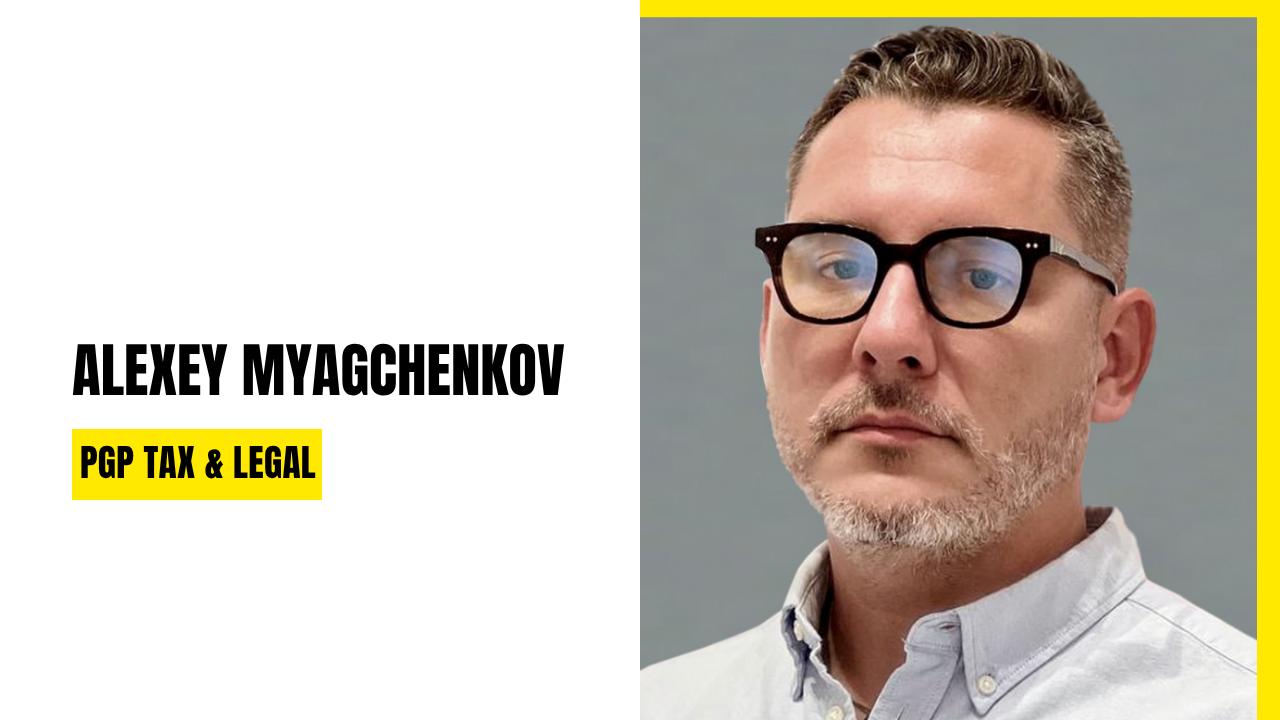
Force majeure clauses across the UAE are being stress-tested like never before, as the ongoing Iran-Israel-US conflict exposes critical gaps in contract drafting and legal interpretation. According to Alexey Myagchenkov, Partner at PGP Tax & Legal, traditional boilerplate provisions — largely shaped by the COVID-19 era — are proving insufficient in addressing modern geopolitical disruptions, raising fresh risks around enforceability, compliance, and dispute resolution across the country’s multi-layered legal systems.
How are force majeure clauses evolving in the UAE?
They are evolving because they have to. The 2026 Iran-Israel-US conflict has exposed a structural weakness: most force majeure clauses in UAE commercial contracts were drafted with COVID in mind. The standard boilerplate — “war, act of God, pandemic” — is proving inadequate for several reasons.
First, the definitional problem. None of the states involved in the current conflict has formally declared war. The events are described as “strikes,” “military operations,” “retaliatory actions.” If a clause lists only “war” without broader language such as “armed conflict,” “military action,” “hostilities,” or “government-imposed restrictions,” there is a genuine question whether it captures what is happening.
Second, the three-regime problem. The UAE has three legal systems: UAE federal and local law, DIFC, and ADGM, each with fundamentally different approaches towards force majeure. Under UAE federal law, force majeure is statutory (Article 273) and requires impossibility of performance, not just difficulty or increased cost. In the DIFC, Article 82 of the Contract Law implies a force majeure term by default, but it does not cover payment obligations. In ADGM, force majeure has no independent legal meaning; it is purely contractual. Without a clause, the only fallback is frustration, which is a far higher threshold.
Third, foreseeability. For contracts concluded before the escalation began, foreseeability is manageable. But for contracts being negotiated now, the conflict itself is a known risk. A standard force majeure clause will not help if the event was foreseeable at the time of contracting.
Are commercial disputes and restructurings on the rise?
Not yet — but the timeline is predictable. The issue is new; breach of contract that can potentially lead to litigation normally has a cure period, and the preparation for going to court takes time. We expect the first wave of disputes once cure periods and Nachfrist deadlines begin to expire, likely in three to six months. The contested issues will be the quality of force majeure notices (were they specific enough?) and whether the impediment actually caused the non-performance.
As for restructurings, for now we see academic interest. Clients want to understand their options: renegotiating contract terms, restructuring obligations, evaluating alternative jurisdictions. But few have pulled the trigger. The UAE Civil Code allows an obligation to be amended if, due to exceptional events, it has become excessively onerous. But this rebalancing under the hardship rule can be made by the court only, not unilaterally by the parties.
What legal risks are emerging from ongoing supply chain disruptions?
The primary risk is breach of contract. For most contracts, we do not expect force majeure to be successfully invoked in the current situation. Under UAE federal law, force majeure requires genuine impossibility: not increased cost, not logistical inconvenience, not delayed flights. The UAE courts were very strict in applying this standard during the COVID era, and it is fair to expect the same level of rigour now.
The event must be unforeseeable, unavoidable, and the sole cause of non-performance. Even the blockage of the Suez Canal did not excuse the parties from responsibility for non-performance. The goods could still be shipped via an alternative route, albeit at higher cost. The exception might be the contracts where performance is physically impossible: operations tied to destroyed or inaccessible port facilities, or obligations that require transit through closed airspace. For those contracts, the impossibility threshold may be met. But for everything else (delayed deliveries, increased shipping costs, rerouted supply chains) the law offers no automatic relief.
How can companies strengthen resilience amid economic uncertainty?
In the short term: audit the contract portfolio, identify which contracts are affected by the conflict, and issue specific force majeure notices where justified. Do not accept vague notices from counterparties without demanding specifics. Check whether any pre-existing defaults undermine a force majeure defence.
In the medium term (one to three months): review and upgrade force majeure clauses in existing and new contracts. The current conflict has demonstrated that clauses must go beyond “war” to include “armed conflict,” “military operations,” “government restrictions,” “port closures,” and “airspace restrictions.” For ADGM-governed contracts, express force majeure clauses are essential since there is no implied term. Where force majeure is unlikely to apply, consider renegotiating existing contracts: extending performance deadlines, adjusting payment schedules, amending delivery terms. Evaluate insurance coverage: war risk, business interruption, trade disruption.
In the longer term (three to twelve months): diversify supply chains and logistics routes. Consider corporate restructuring of some of the affected parts of the business, if the current jurisdiction no longer serves it. Prepare for the new Civil Code, which takes effect on 1 June 2026 and introduces broader judicial remedies for hardship and an expanded regulation for pre-contractual negotiations.
What UAE employment law changes are impacting workforce strategies?
The conflict has raised questions about employer obligations during emergencies: remote work arrangements, evacuation plans, salary continuity during disruptions, and the duty of care to employees in affected areas. There is general duty to provide a safe working environment.
Employers need to update their employment contracts, in particular, to formalise remote work arrangements that many adopted as emergency measures. The emergency protocols must be reviewed for employees who remain in the office, in line with the official UAE government recommendations.
How can businesses stay compliant in an increasingly complex regulatory landscape?
Compliance in the UAE has always been and still is a multi-layered exercise. The country is not one regulatory environment, with each free zone adding its own rules on top. The practical recommendation is to treat compliance not as a one-time setup but as an ongoing function, with regular reviews of corporate structure, licensing, employment arrangements, and contractual frameworks against the current regulatory environment. In the current climate, that also means stress-testing contracts: are the force majeure clauses adequate, are the governing law and dispute resolution clauses fit for purpose, and does the corporate structure still serve the business in a changed geopolitical environment.