Gulfood360 Africa to Debut in Nairobi in May 2027
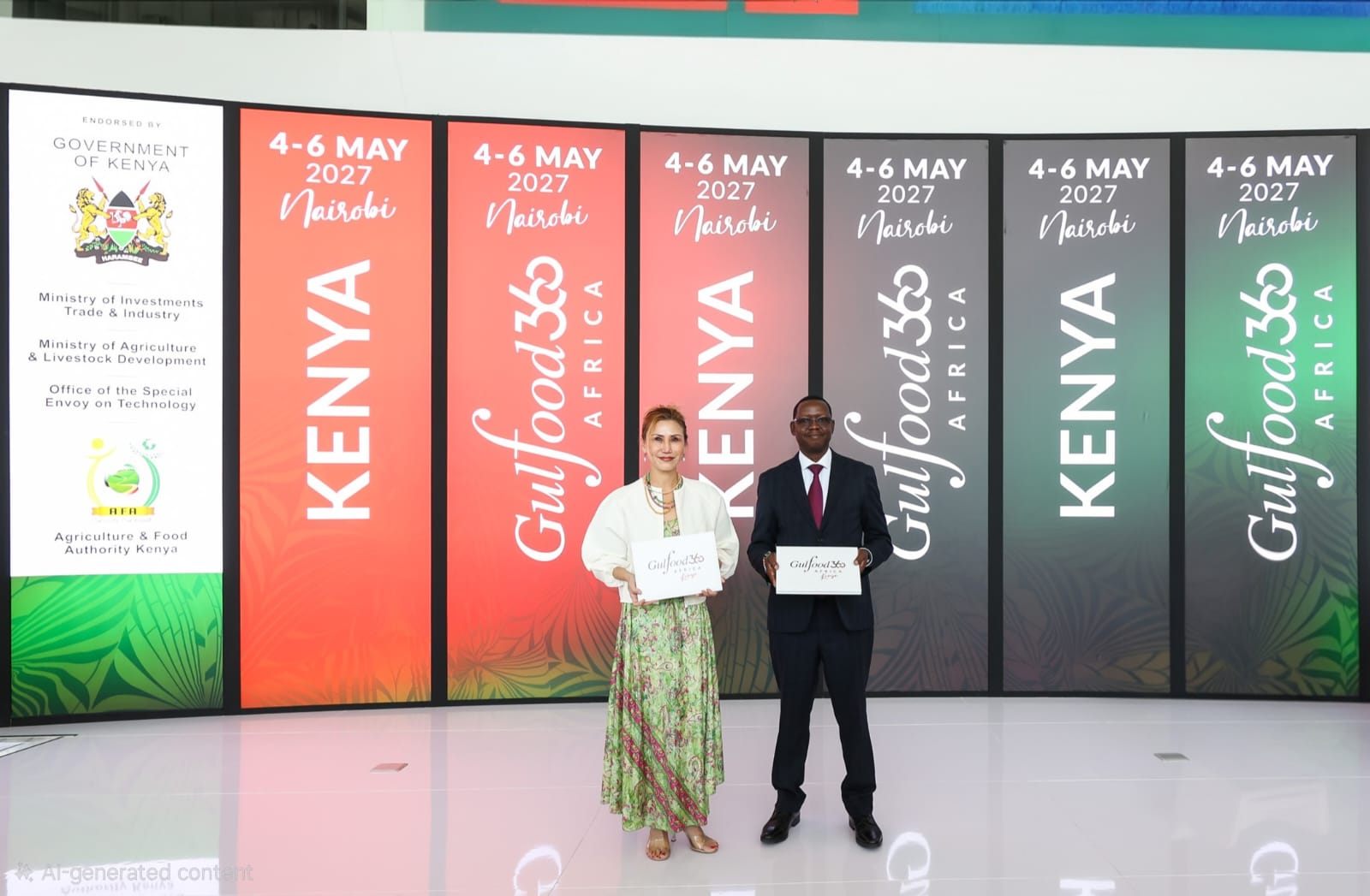
Gulfood has announced its expansion into Africa with the launch of Gulfood360 Africa/Kenya, which will debut in Nairobi from 4–6 May 2027. Revealed during Gulfood 2026 in Dubai, the move confirms Kenya as the official African host of the Gulfood platform and positions the country as a key entry point into Africa’s global food, agribusiness, logistics and innovation ecosystem.
The initiative is being launched with the backing of Kenya’s Ministry of Investments, Trade and Industry, the Ministry of Agriculture and Livestock Development, the Agriculture and Food Authority, and the Office of the Special Envoy on Technology. Gulfood360 Africa/Kenya marks a strategic partnership between Kenya and the UAE under the Kenya–UAE Comprehensive Economic Partnership Agreement, aimed at boosting trade flows, attracting foreign direct investment, strengthening regional value chains and accelerating Africa’s integration into global food markets.
The launch aligns with President William Ruto’s Bottom-Up Economic Transformation Agenda, which focuses on agriculture, manufacturing, trade, logistics and technology as drivers of Kenya’s economic advancement. Gulfood360 Africa/Kenya is expected to act as a catalyst for agricultural value addition, agro-industrialisation, SME participation and export growth, while reinforcing Kenya’s role as Africa’s leading agrifood and trade gateway.
Kenya’s selection is supported by continued investment in large-scale infrastructure and logistics, including the expansion of Jomo Kenyatta International Airport, upgrades to regional airports, modernisation of the Port of Mombasa and the development of multimodal trade corridors linking Eastern and Central Africa. These projects are part of President Ruto’s Infrastructure Fund, which channels long-term capital into transport, logistics, industrial zones, cold-chain networks and export-oriented manufacturing.
The country’s competitiveness is further strengthened by its leadership in renewable energy and climate-smart development. Through a national clean energy programme targeting 10,000 MW of capacity, Kenya is expanding geothermal, wind, solar and hydroelectric power. More than 90 per cent of its electricity already comes from clean sources, offering investors in agribusiness, manufacturing and logistics access to reliable, low-cost and low-carbon energy.
Kenya also plays a central role in Africa’s agrifood landscape. Sub-Saharan Africa holds more than 60 per cent of the world’s uncultivated arable land, while Kenya provides a strategic gateway to the African Continental Free Trade Area, a unified market of over 1.4 billion people. As a major producer and exporter of tea, coffee, horticulture, livestock and processed foods, the country offers global companies a platform to scale across Africa’s rapidly expanding food economy, projected to reach more than $567 billion by 2032.
Beyond agriculture, Kenya is widely recognised as Africa’s Silicon Savannah, with strong capabilities in digital payments, logistics technology, climate-smart agriculture, artificial intelligence and supply-chain digitisation. Its young, tech-enabled population underpins innovation and entrepreneurship, while Gulfood360 Africa/Kenya is expected to highlight how AI-driven agritech, digital trade platforms and smart logistics are reshaping food systems, improving traceability, reducing food loss and strengthening supply-chain resilience.
The announcement follows Kenya’s hosting of AI Everything x GITEX Kenya in May 2026, reinforcing the country’s position as a regional hub for global trade, technology and innovation-led dialogue. Together, these platforms reflect Kenya’s strategy of using major international events to attract investment, forge partnerships and enhance its global economic standing.
With the launch of Gulfood360 Africa/Kenya, global buyers will gain a single, trusted gateway into Africa’s fast-growing food supply base. From Nairobi, trade contracts are expected to be executed, capital deployed and cross-border value chains activated, connecting African producers more directly with global markets and long-term growth opportunities.