Two Decades of Reinvention in Digital Marketing
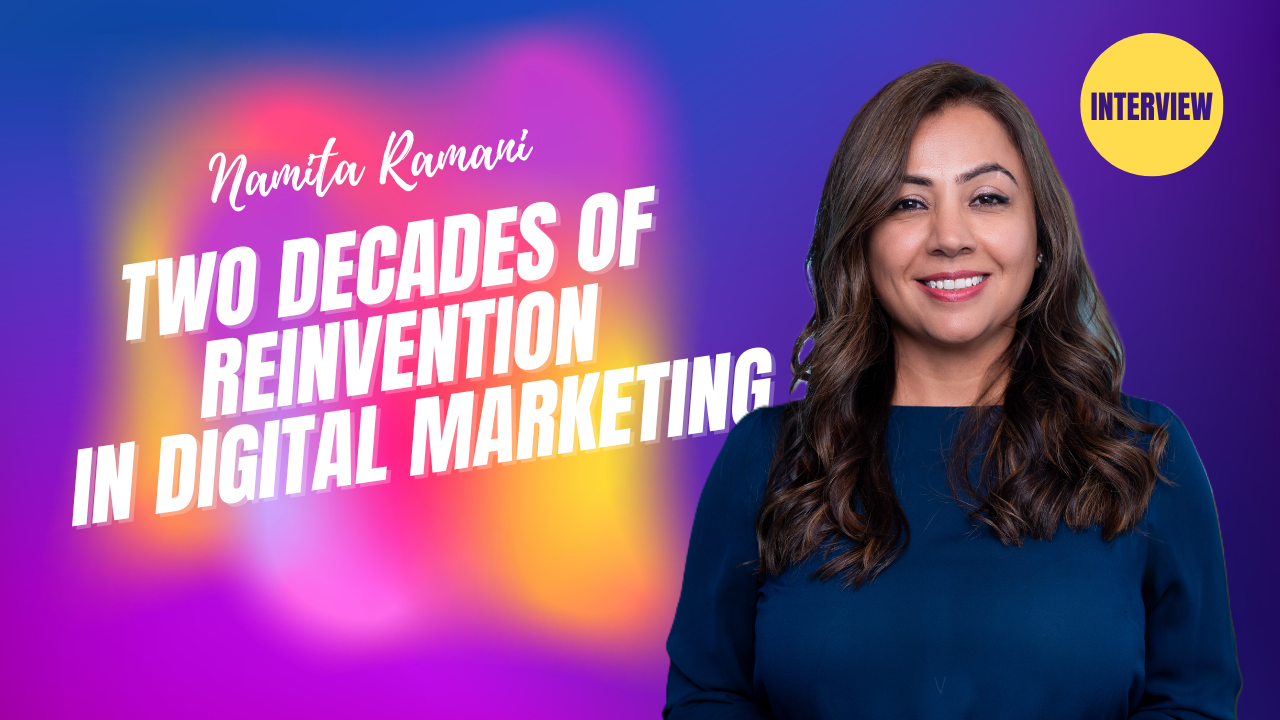
Namita Ramani, CEO of Above Digital, reflects on building her company from a small web design studio in 2004 into a performance-driven lead generation agency. In this conversation, she shares the pivotal moments that shaped her journey, the quiet barriers women still navigate in business, and why curiosity, financial independence and continuous learning are essential for leaders in an AI-driven marketing landscape.
What defining moments or challenges most shaped your professional journey?
Running Above Digital for more than two decades has been a journey of constant reinvention.
When I started the company in Dubai in 2004, the original idea was to build a web design agency. At the time, however, many businesses did not yet believe they needed a website. To keep the business moving forward, we expanded into branding, logo design and print advertising. In hindsight, that phase was incredibly valuable because it strengthened our understanding of visual communication and creative strategy.
As the internet matured, businesses began investing more seriously in digital platforms. This marked the second phase of our growth, when we transitioned into a web focused agency building larger websites and online platforms. During that period we expanded our technical capabilities and built a cross border team, which taught me a great deal about scaling operations and managing complexity.
A third turning point came through mentorship. Attending a copywriting conference at Stanford completely changed the way I thought about marketing. It shifted our focus from simply building digital assets to understanding the entire customer journey and the role of messaging in driving conversions. From there, Above Digital evolved into a performance focused agency specialising in lead generation through paid media. Looking back, each phase required letting go of what was comfortable and adapting to what the market needed next.
What barriers do women still face in leadership today that are not talked about enough?
One of the less discussed barriers is access, not just to opportunities but to the informal networks and industry circles where many decisions are made. Early in my career I explored several industries while trying to identify our niche. I initially looked at the coffee sector, but it was dominated by a small network of established players and large agencies, which made entry difficult for an independent entrepreneur. I then explored art galleries, but the marketing budgets simply were not there.
Eventually we found traction in the spa industry, where we became known for spa marketing. That niche shaped the early growth of the agency. Along the way there were also moments that made me more aware of how women are perceived in business environments. Early in my career I occasionally encountered situations where professional conversations crossed uncomfortable boundaries. Experiences like that force you to reflect on how you present yourself and how you establish authority.
What many women quietly navigate is the need to balance credibility, perception and personal safety at the same time. Over time, as I became more confident in how I positioned myself professionally, those challenges became easier to manage.
How have you built credibility and influence in environments where women are underrepresented?
A major shift in my career came when a coach introduced me to the concept of solution based selling. Instead of focusing on selling services, the emphasis was on understanding the client’s business problem and presenting a clear path to solving it. When conversations focus on outcomes rather than services, credibility builds much faster.
Over the years I have also become very disciplined about measuring results. Every campaign we run is an opportunity to learn something about customer behaviour, messaging and conversion. After managing thousands of campaigns and working with hundreds of clients, you develop a strong instinct for what works and what does not.
That experience has been the foundation of our credibility. When clients see consistent results, the conversation shifts from questioning your authority to relying on your expertise.
How is technology, especially AI and automation, changing leadership expectations in your industry?
My first reaction to AI was actually concern. I wondered whether agencies like ours would eventually become less relevant if technology could generate creatives, write copy and optimise campaigns automatically. However, that perspective changed once I began learning how the technology works and how it can be integrated into our processes.
What AI does best is remove repetitive work. It allows teams to focus on strategy, insights and higher quality output. In many ways it makes agencies more efficient rather than replacing them. A good example is lead management. For years many businesses lost potential customers simply because follow up processes were slow or inconsistent.
Today automation and AI tools allow companies to respond instantly, qualify prospects and guide them through the early stages of the sales journey. As a result, businesses are often converting more leads into real sales. For leaders, this shift means staying curious and open to experimentation. Those who learn how to work with these tools will be able to deliver stronger outcomes and operate far more efficiently.
What skills or mindsets will be most critical for the next generation of women leaders? What role have mentorship and sponsorship played in your career?
One mindset I strongly encourage women leaders to adopt is the willingness to invest in their own growth. Throughout my career I have always worked with mentors or coaches. Entrepreneurship can be a lonely journey and having someone who can challenge your thinking and provide perspective is incredibly valuable. Financial awareness is another area where I believe women should place greater focus. Building assets and financial independence over time creates long term security and freedom in decision making.
Continuous learning is equally important. I maintain a training budget every year and regularly invest in courses related to marketing, leadership and emerging technologies. The same mindset applies to my team. In a rapidly changing world, leaders who remain curious and committed to learning will always stay ahead.
What does International Women’s Day mean to you and what real change would you like to see beyond it?
International Women’s Day is an opportunity to reflect on how far women have come in business while recognising the progress that still needs to be made. At Above Digital, close to 80 percent of our team has been women for many years. Seeing their dedication, creativity and resilience reinforces my belief that when women are given opportunities to grow and lead, they thrive.
There has certainly been progress in terms of leadership opportunities. However, pay parity and equal access to opportunities are still areas that need continued attention. Another important factor is safety and respect in professional environments. For women to thrive in leadership roles, they must feel secure and valued in every setting, whether in the workplace, at networking events or when travelling for business.
For me, International Women’s Day should not only be about celebration. It should also remind us to continue building environments where women are valued for their competence and contributions. Real progress will come when those conditions become the norm rather than the exception.