From Skills to Social Impact: Rethinking Leadership Through Purpose and Livelihoods
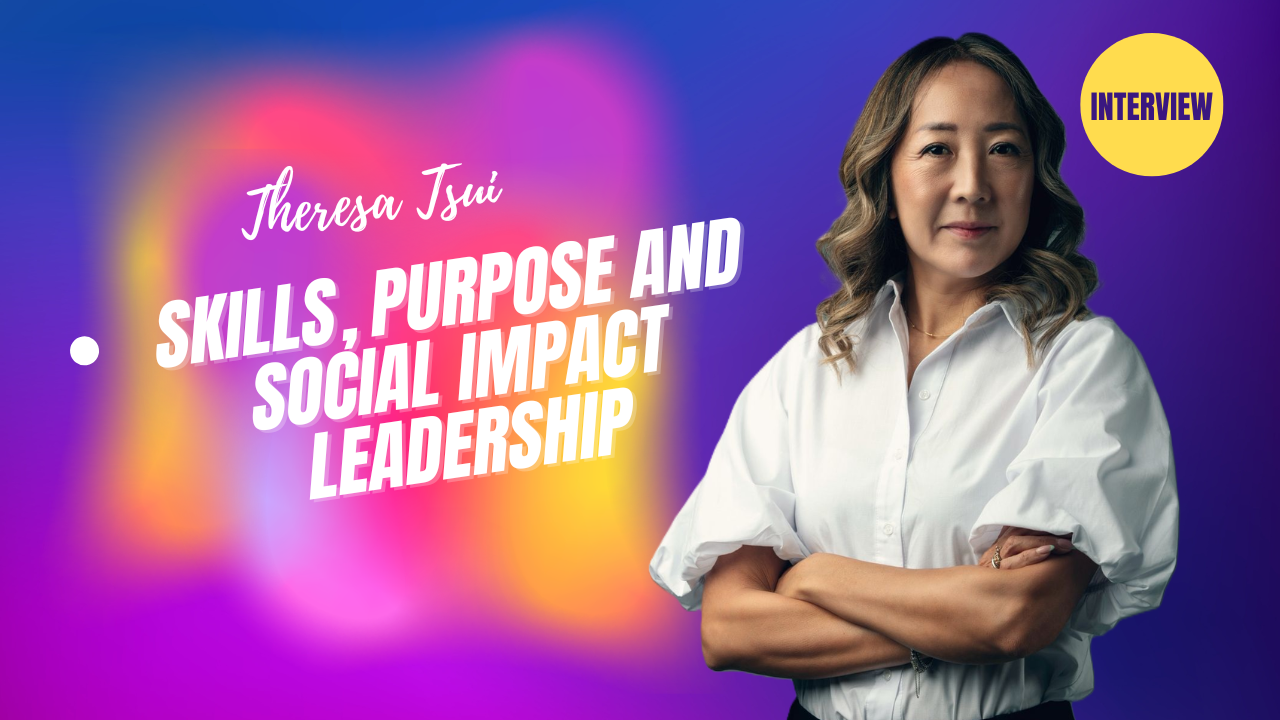
Theresa Tsui, co-founder of Skills3, shares how experiences working with women in refugee communities shaped her belief that practical skills can drive economic empowerment and social transformation. In this conversation, she reflects on building a mission-driven enterprise, the often-overlooked challenges women leaders face, and why the future of social impact leadership lies in blending purpose, measurable outcomes, and sustainable business thinking.
What defining moments or challenges most shaped your professional journey?
One of the defining moments in my professional journey came from spending time in refugee camps in Turkey and later in Iraq, where we were exploring how practical skills could create real economic opportunity. I saw first-hand how something as simple as sewing could become a tool for transformation – enabling women to generate income, rebuild confidence and contribute meaningfully to their communities.
That experience shaped the foundation of our work at Skills3. It reinforced my belief that innovation does not always have to be high-tech to be transformative. Sometimes the most powerful solutions are accessible, human and rooted in existing skills. Another challenge was building a mission-driven enterprise at a time when social entrepreneurship was still relatively new in this region.
Ten years ago, the idea that a business could be both purpose-driven and commercially disciplined was not widely understood. We had to consistently demonstrate that social impact and sustainable business models can – and should – coexist.
What barriers do women still face in leadership today that aren’t talked about enough?
We talk about representation and pay gaps, which are important. What is discussed less is the invisible labour that often falls to women in leadership. Women are frequently expected to carry culture, mentor others, mediate tensions and lead teams while delivering results – responsibilities that are not always formally recognised.
In mission-driven sectors there is also a perception that impact work is somehow “soft”. In reality, building sustainable livelihood systems, developing circular design initiatives and delivering measurable ESG outcomes requires rigorous thinking, financial discipline and long-term strategy.
How have you built credibility and influence in environments where women are underrepresented?
For me, credibility has come from delivering outcomes. In social impact work, influence grows when results are tangible – livelihoods created, waste diverted from landfill, artisans connected to markets, employees meaningfully engaged in purpose-driven initiatives. As a leader in a mission-driven organisation, it is also important to bridge two worlds: community realities and corporate priorities.
I have found that when you bring practical solutions that align impact with business value, people listen. Preparation, clarity and consistency have also been important. Confidence grows when you know your subject and the impact your work is creating.
How is technology, especially AI and automation, changing leadership expectations in your industry?
Technology is accelerating expectations around transparency and data. AI and automation are making it easier to track impact metrics, analyse supply chains and measure outcomes. For organisations working in ESG and social innovation, this means we need to combine storytelling with credible data.
At the same time, leaders need to ensure that technological progress does not leave communities behind. Automation should not simply replace livelihoods – it should also help create new pathways for skills, income and participation. For those of us working at the intersection of creativity, sustainability and social impact, technology can support efficiency, but human connection and cultural understanding remain central.
What skills or mindsets will be most critical for the next generation of women leaders?
Adaptability will be essential. The landscape of business, technology and social impact is evolving rapidly. Systems thinking will also be critical – understanding how communities, companies, supply chains and policy influence one another. Financial literacy is another key capability. Impact initiatives that cannot sustain themselves economically will struggle to scale. And finally, resilience. Leading change – especially in mission-driven work – often means navigating uncertainty, limited resources and slow systemic progress. The ability to stay focused on the bigger picture is important.
What role have mentorship and sponsorship played in your career, and how do you support others today?
Mentorship has played an important role in shaping my thinking. The mentors who had the greatest impact were those who asked challenging questions rather than simply offering encouragement. In my work today, I try to extend that same support through the initiatives we run and the mentorship programs we support. It’s in our DNA. Whether it is supporting women artisans to access the retail markets, change makers wanting to start something impactful or entrepreneurs needing an extra opinion – visibility and opportunity are key.
How can organizations move beyond policies to create cultures where women genuinely thrive?
Policies are important, but culture determines whether those policies actually work. Organizations need leadership accountability for gender equity outcomes. That means measurable goals, transparent promotion pathways and genuine flexibility that does not penalise career progression.
From my experience working with companies on ESG and employee engagement initiatives, culture shifts most when purpose becomes embedded in everyday decision-making – not just in statements or policies. When people feel that their work contributes to something meaningful, engagement and inclusion tend to follow.
What does International Women’s Day mean to you, and what real change would you like to see beyond it?
This year’s theme, “Give to Gain”, resonates strongly with the work we do at Skills3. In many ways, our journey has been about creating systems where giving leads to collective gain. When companies invest in community programmes, they gain engaged employees and meaningful ESG outcomes.
When artisans are given skills, access and opportunity, they gain livelihoods and agency. When businesses choose circular design approaches, both communities and the environment benefit. As leaders of mission-driven organisations, we see this principle every day: when resources, knowledge and opportunities are shared, value multiplies.
Beyond International Women’s Day, I would like to see greater investment in women-led enterprises and practical pathways for women to access skills, markets and capital. Real progress happens when women are not only included in conversations, but equipped with the tools and opportunities to shape them.