
How UAE Businesses Are Redefining Risk, Resilience, and Legal Strategy
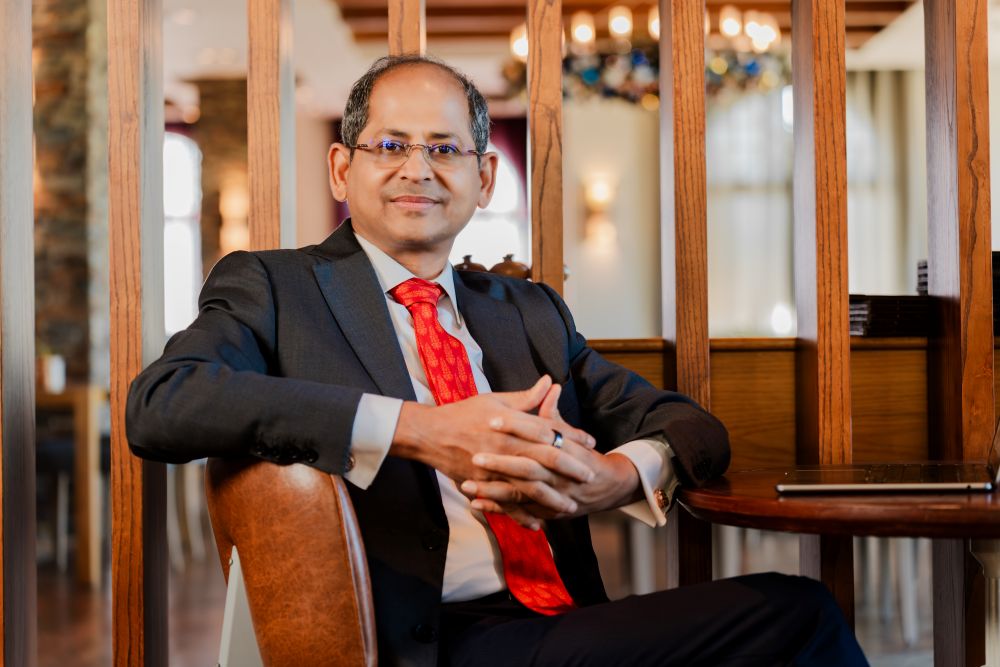
Ramki Jayaraman, Managing Partner at Synarchy Consulting, explains how force majeure clauses in the UAE have evolved from standard contractual safeguards into strategic risk management tools. As businesses navigate geopolitical volatility, supply chain disruptions, and regulatory complexity, organizations are embedding resilience directly into contracts, operations, and workforce strategies—signaling a broader shift toward proactive, commercially driven legal and business decision-making.
How are force majeure clauses evolving in the UAE?
Force majeure is no longer a boilerplate clause—it has become a front-line risk management tool. We have seen firsthand how geopolitical shifts and regional disruptions can ripple quickly into UAE-based businesses—whether through supply chain interruptions, aviation volatility, or shifting regulatory conditions. What this has exposed is that traditional clauses built around “unforeseen events” are simply not fit for purpose anymore.
Clients are now moving toward much more explicit articulation of risk—naming specific triggers such as sanctions, logistics disruptions, and regulatory actions. Just as importantly, there is a growing expectation that invoking force majeure is not enough—organizations must demonstrate how they are mitigating impact. What this signals is a broader shift: resilience is no longer assumed from the operating environment—it needs to be designed into contracts and operating models.
Are commercial disputes and restructurings on the rise?
Yes—but I would frame it less as a rise in distress and more as a recalibration of commercial relationships. What we are seeing across the UAE is pressure coming from multiple directions—cost volatility, revenue unpredictability, and tighter liquidity in certain sectors. Naturally, this leads to more disputes, particularly around performance timelines, pricing adjustments, and payment terms.
At the same time, restructurings are becoming far more strategic. With the UAE’s evolving insolvency framework, businesses are increasingly willing to act early—to reset capital structures and operating models before issues escalate. What is encouraging is that disputes themselves are changing in nature. There is a clear shift toward pragmatic, commercially driven resolutions—mediation, arbitration, and negotiated settlements rather than prolonged litigation. In many cases, what we are seeing is not breakdown—but realignment under pressure.
What legal risks are emerging from ongoing supply chain disruptions?
Supply chain disruption is no longer episodic—it’s structural. And that fundamentally changes the legal risk landscape. Even where companies are not directly exposed to instability, second- and third-order effects are creating contractual strain—missed deliveries, cost escalations, and cascading liabilities across value chains.
Another layer of complexity comes from the UAE’s role as a global hub. Businesses here are managing multi-jurisdictional supply networks, which introduces risks around sanctions, compliance, and enforceability. We also see more substitution risk—companies moving quickly to alternate suppliers to maintain continuity, sometimes without sufficient diligence, leading to quality and liability issues.
The takeaway is clear: efficiency-driven supply chains are no longer sufficient. What’s needed is a shift toward legally resilient supply ecosystems, with diversification, flexibility, and tighter alignment between legal and procurement.
How can companies strengthen resilience amid economic uncertainty?
In my view, resilience today is less about reacting well—and more about being structurally prepared. The UAE remains a stable environment, and recent government interventions reinforce that. But for businesses operating here, exposure to global volatility is inevitable.
What differentiates stronger organizations is a few things:
- Contractual flexibility — the ability to adjust terms as conditions change
- Integrated risk visibility — breaking silos between legal, finance, and operations
- Capital discipline — preserving liquidity and deploying it with intent
- Operational diversification — reducing reliance on single markets or suppliers
What we are seeing in practice is that resilience is no longer a defensive posture—it is becoming a core strategic capability, enabling companies to navigate uncertainty while still pursuing growth.
What UAE employment law changes are impacting workforce strategies?
The UAE’s employment landscape has evolved significantly, and it’s reshaping how organizations think about talent. The move toward more flexible employment models—fixed-term contracts, part-time structures—has introduced much-needed agility. But alongside this, compliance expectations have become more structured and demanding.
Emiratisation is a good example of how the landscape is shifting. It is no longer treated as a compliance requirement—it is increasingly seen as a strategic workforce priority, requiring sustained investment in capability building. We also see stronger emphasis on employee protection and dispute mechanisms, bringing the UAE closer to global best practices. Overall, the shift is clear: workforce strategy is moving from cost optimisation to capability and sustainability.
How can businesses stay compliant in an increasingly complex regulatory landscape?
Compliance in the UAE is becoming more sophisticated—and that reflects the market’s maturity. The challenge for businesses is not just staying compliant, but doing so without slowing down execution. The most effective organizations are making three shifts:
- From reactive to proactive compliance — anticipating changes rather than responding to them
- From manual to technology-enabled processes — particularly in multi-jurisdictional environments
- From legal-led to enterprise-wide ownership — embedding compliance across functions
One of the UAE’s strengths is regulatory stability, even in times of broader uncertainty. Companies that treat compliance not as a constraint, but as a strategic enabler, tend to move faster, build stronger credibility
